
Quorus Announces Expanded Capabilities So Advisors Keep the Strategy They Chose
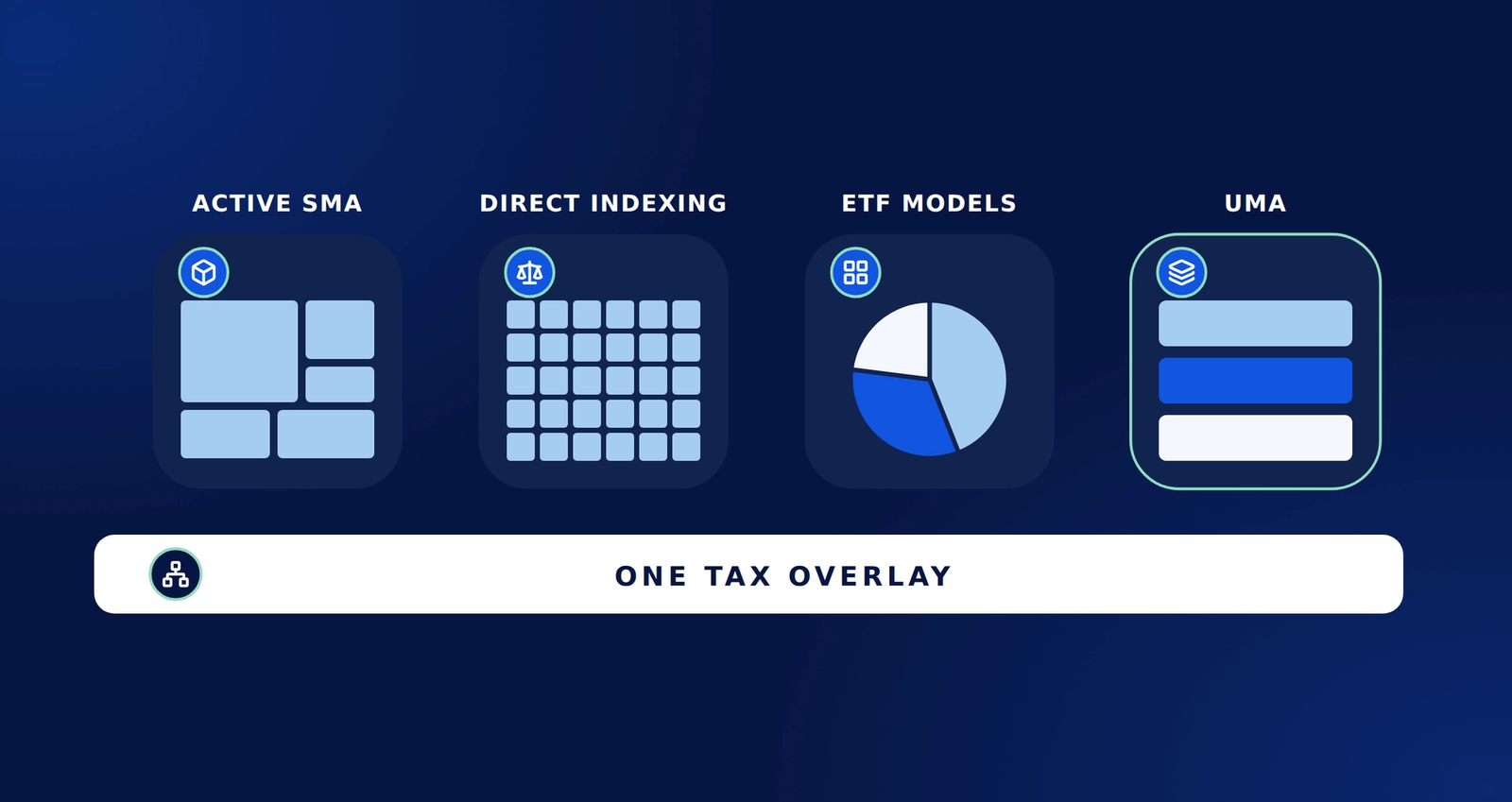
Quorus is announcing the first in a series of capability expansions, now supporting active tax-managed SMAs, direct indexing, ETF models and UMAs, on the founding argument that advisors should never have to trade away their investment strategy to get sophisticated tax management.
Most tax-management providers hand the advisor a menu.
Here are the strategies you can run. Here is the account structure you have to run them in. And, usually unspoken, here is what we do not support. The wrapper, the structure, and the strategies you are allowed to combine are decided before you ever onboard an account.
Choose from that menu, and the platform has settled your investment approach before you walked in the door. Advisors get tax management, but at the cost of compromising their investment choices to the third-party platform's limited offerings. Independent indeed.
Investment strategy is one of the most important pillars of an advisory practice. It reflects how a firm thinks, what it believes about markets, and it is a large part of why a client chooses one firm over another. Asking an advisor to set that aside in order to deliver sophisticated tax management to clients gets the priorities backward.
Quorus was founded on the belief that no advisor should have to make that trade. Today we are announcing the first of a series of significant expansions of Quorus' capabilities. This expansion is the direct result of close collaboration with our advisor and asset manager partners and builds on the unprecedented investment flexibility our clients value.
You Bring the Strategy. We Build the Tax Overlay.
Quorus is a tax-managed portfolio implementation partner, not a proprietary asset manager. The investment decisions stay with the advisor: active or passive, your own strategy or a third party's, a single mandate or a custom blend. We build the tax overlay to match what you are running, and we execute it.
That distinction is the whole design. A generic wrapper applies the same tax logic to whatever is underneath it, which works acceptably when nothing underneath needs protecting. Tax logic purpose-built for a strategy has to do something harder: generate tax alpha while respecting the investment signal that the strategy exists to express.
We started Quorus focused on active equity, implemented as single-sleeve separately managed accounts. That was a deliberate starting point, because tax management inside an active portfolio is the hardest version of the problem.
In a passive direct-indexed sleeve, the overlay works on a benchmark universe with a deep bench of substitutes. A holding sitting on a loss can be sold and replaced with something carrying similar exposure while keeping portfolio risk close to the target index. An overlay developed for one market-cap-weighted index often ports to another, because indices share the same characteristics: a large number of securities, low turnover, and no alpha target.
Active portfolios are different. An active strategy's holdings and weights are the best ideas of a portfolio management team. A position is its size because that team decided it should be. And because active portfolios are so individualized, they are incredibly diverse.
So an overlay cannot trade a name out simply because a loss is available and lean on standard macro risk assessments to cover the difference. Doing that risks warping the underlying investment signal beyond its intended targets to make a tax decision. Instead, the overlay has to balance the value of recognizing losses against the impact to the strategy's signal, and it has to keep doing that while the manager continues to trade the portfolio underneath it.
That constraint shaped how we built Quorus. The overlay treats the investment strategy as a critical input, not an afterthought, and every capability we have added since runs on that same foundation.
What That Freedom Looks Like Today
Active tax-managed separate accounts.
For advisors running their own equity strategy or a third-party manager's. The overlay harvests losses and manages wash sales inside the manager's positions while respecting position sizing and the investment case underneath. When the manager trades, the overlay works with those trades rather than against them.
Custom SMA blends.
Beyond single strategy, advisors can combine several strategies in one separate account and set the weights themselves, so the SMA fits their exact model allocation rather than the nearest available approximation. The overlay treats the blend as the strategy it is managing.
Passive direct indexing.
Popular market-cap-weighted indices, held as individual constituents with a continuous tax overlay on top. Standard beta exposures for advisors implementing passive or core-satellite strategies.
ETF model portfolios.
For advisors running model-driven allocations, whether the model comes from a third party or from the firm itself. Tax-aware rebalancing and loss harvesting are applied at the account level, so a model change does not arrive at the client as an untimed realized gain.
Unified managed accounts.
ETF, mutual fund, and independent SMA sleeves combined within a single account registration. For an advisor whose target allocation uses different vehicles, this is the difference between opening one account and several. One registration, one statement, one set of paperwork, and one thing to maintain, for what was always meant to be a single strategy.
Across all of it, the same principle holds. We implement the strategies advisors want, whether off-the-shelf, custom-built, or a blend of both. We do not start conversations by handing over a list.
Advisors Deserve Choice in Strategy and in Vehicle
Choosing an investment strategy and choosing the vehicle it is implemented in are two separate decisions, and an advisor should get to make both. A firm can have a settled investment view and, more often than not, set it aside because the tax management its clients need is only available in someone else's strategy or structure. The strategy is what gives way.
A firm with a strong view on portfolio construction should be able to act on it and still deliver robust tax management. A firm that believes in low-cost passive strategies should be able to act on that instead. A firm that wants an ETF allocation alongside a custom blend SMA sleeve should be able to run it in one account registration rather than two.
None of those choices should determine whether a client gets sophisticated tax management, and none of them should have to be compromised to get it.
Bring Us the Strategy You Want to Run
If you have been told the strategy you want to implement isn't supported, or you are tired of being sold a proprietary strategy to get tax management, we want to talk. Bring us the strategy you wish you could run, and we will show you the overlay that makes it work after tax.
Disclosures
All investing is subject to risk, including possible loss of principal.
Quorus Inc. ("Quorus," "we," or "our") is an investment adviser registered with the Securities and Exchange Commission ("SEC"). Registration does not imply a certain level of skill or training.
The material presented is for informational purposes only and should not be construed as investment advice. It is not a recommendation of, or an offer to sell or solicitation of an offer to buy, any particular security, strategy, or investment product. Investing in securities involves risks, including the potential loss of money, and past performance does not guarantee future results. Historical returns, expected returns, and probability projections are provided for informational and illustrative purposes and may not reflect actual future performance. Nothing in these materials should be construed as personalized investment advice, which can only be provided in one-on-one communications.
Tax-loss harvesting and tax-aware management seek to improve after-tax outcomes but do not guarantee any tax result, and their effect depends on a client's individual circumstances, including tax rates, holding periods, and other activity in the client's accounts. Quorus does not provide tax or legal advice. Clients should consult their own tax and legal advisers.
The capabilities described are subject to eligibility, custodial arrangements, and account minimums, and availability may change without notice. References to third-party vehicles, managers, and trademarks are for identification only and do not imply endorsement, sponsorship, or affiliation. Investing in exchange-traded funds and mutual funds involves risk, including possible loss of principal, and investors should review a fund's prospectus before investing.
A copy of Quorus's current Form ADV Parts 2A and 2B, which contain important information about our advisory services, fees, and disciplinary history, is available upon request.